
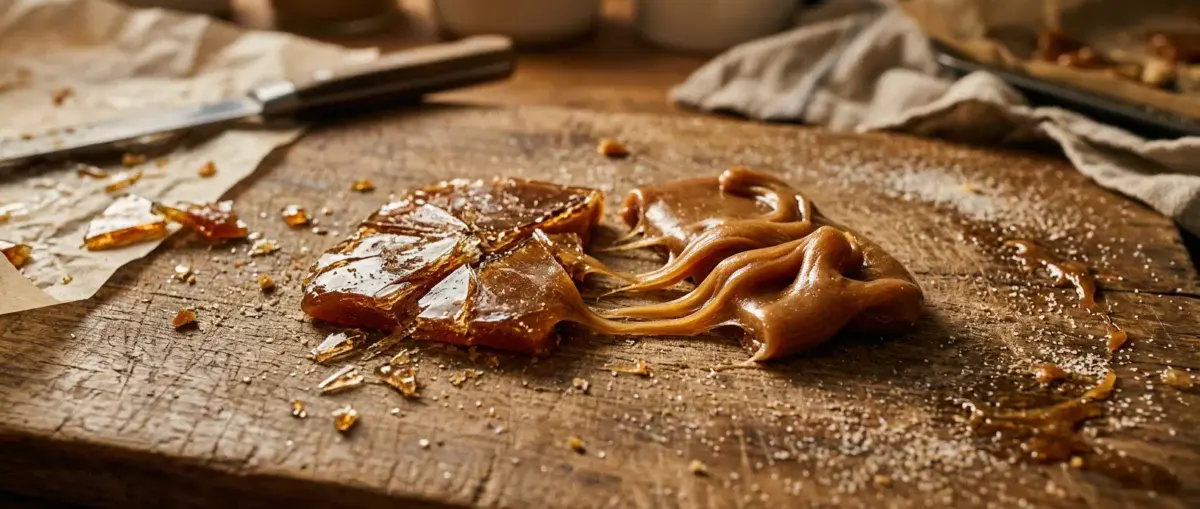
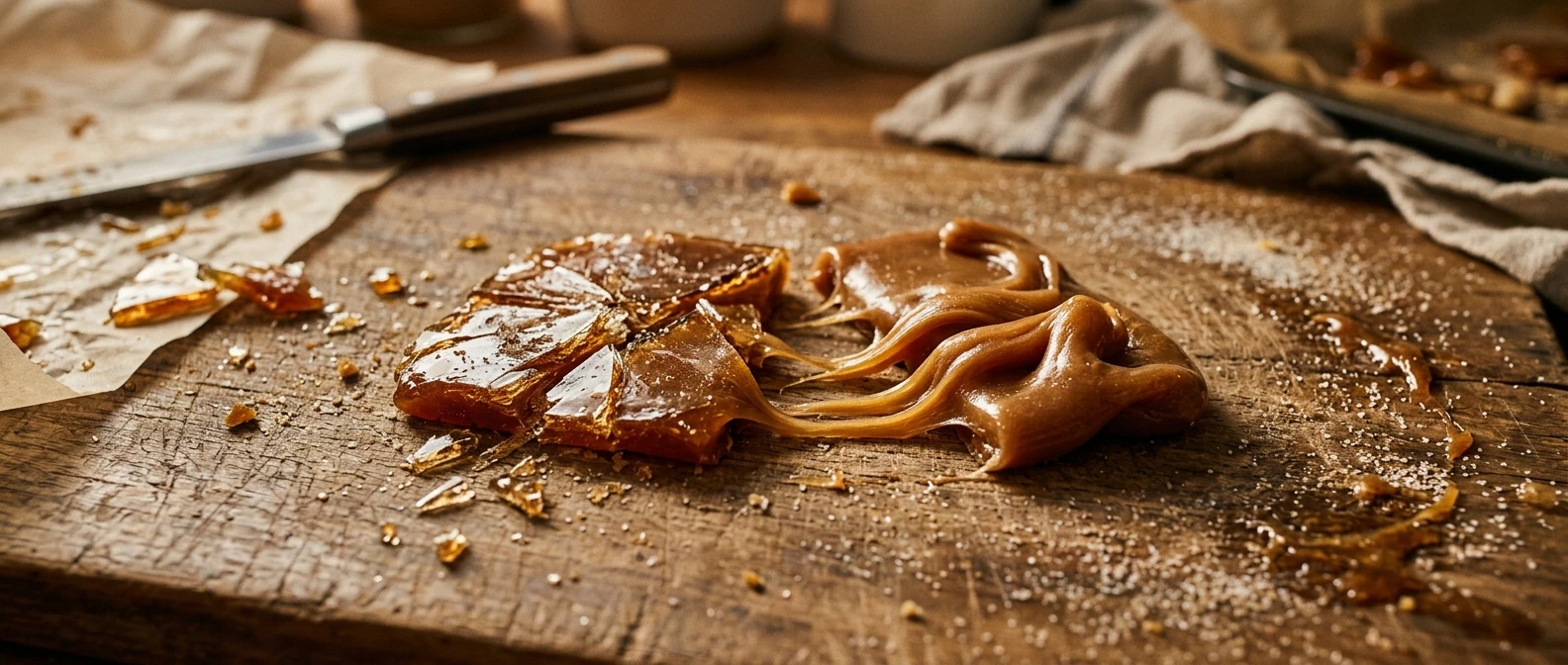
Chewy toffee is one of the most common candy failures, and it almost always comes down to one thing: the sugar never actually reached hard crack stage, even if your recipe said it did. The pan looked right, it smelled like toffee, maybe it even hit the number on your thermometer. But if it’s bending instead of snapping, the sugar concentration wasn’t where it needed to be when you pulled it off the heat. Let’s figure out why, see if tonight’s batch is salvageable, and get you set up so the next one comes out right.
The one reason toffee turns chewy almost every time
Toffee is really just sugar and water cooked until most of the water boils off. Hard crack stage, around 300 to 310°F, is the point where there’s so little water left that the sugar hardens into a brittle, glassy structure when it cools. Chewy toffee means there was still water trapped in the sugar when you took the pan off the heat, so it cooled into something closer to caramel.
The recipe isn’t usually the problem. Butter, sugar, and water in the right ratio behave predictably. What goes wrong is almost always the moment you decided the sugar was done. If you pulled it at 280°F thinking it was 300°F, or you eyeballed the color and texture without a reliable number, the batch never got there. And the single biggest reason people misjudge that moment is a thermometer that’s quietly reading wrong.
What hard crack stage actually looks, smells and sounds like
Numbers matter, but your senses back them up. At true hard crack, the bubbling in the pan slows down and gets thicker, almost syrupy looking, and the color shifts from pale gold to a deeper amber. The smell changes too: it goes from sweet and buttery to something closer to toasted caramel, with a faint nutty edge. If it smells sharp or like it’s starting to burn, you’ve gone too far; if it still smells mostly like melted sugar, you’re not there yet.
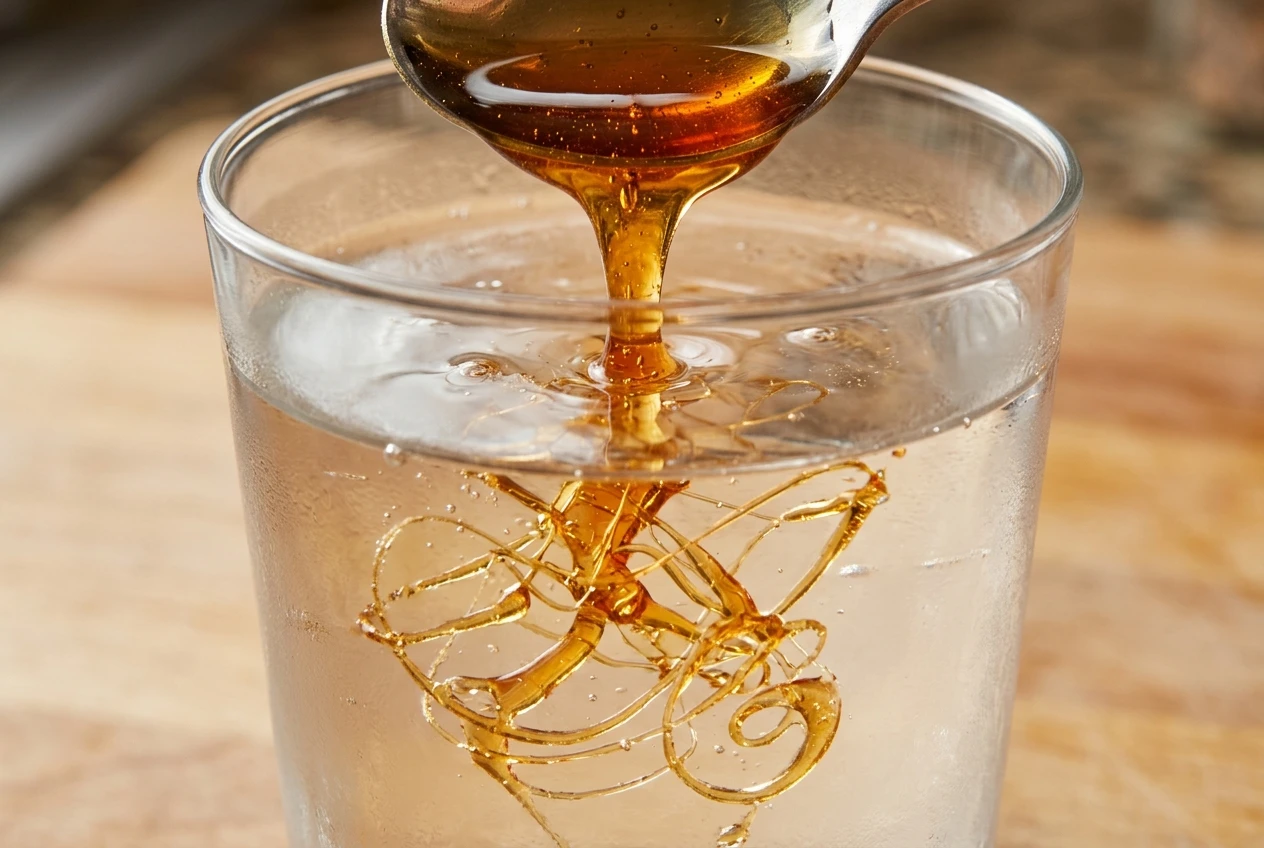
The classic test is the cold water drop. Spoon a small amount of the hot sugar into a cup of cold water. At hard crack, it should form thin, brittle threads that snap cleanly when you bend them. If what you pull out bends or feels sticky and pliable, the sugar isn’t ready, no matter what the thermometer says. This test is worth doing every time, especially while you’re still building trust in your equipment.
Is your thermometer lying to you? A two minute test to find out
This is the step most beginners skip, and it’s usually the real culprit. Candy thermometers drift out of calibration over time, and a cheap or older one can read anywhere from a few degrees to 15 degrees off. A thermometer reading 300°F when the sugar is actually only at 288°F will produce exactly the chewy toffee you’re troubleshooting right now.
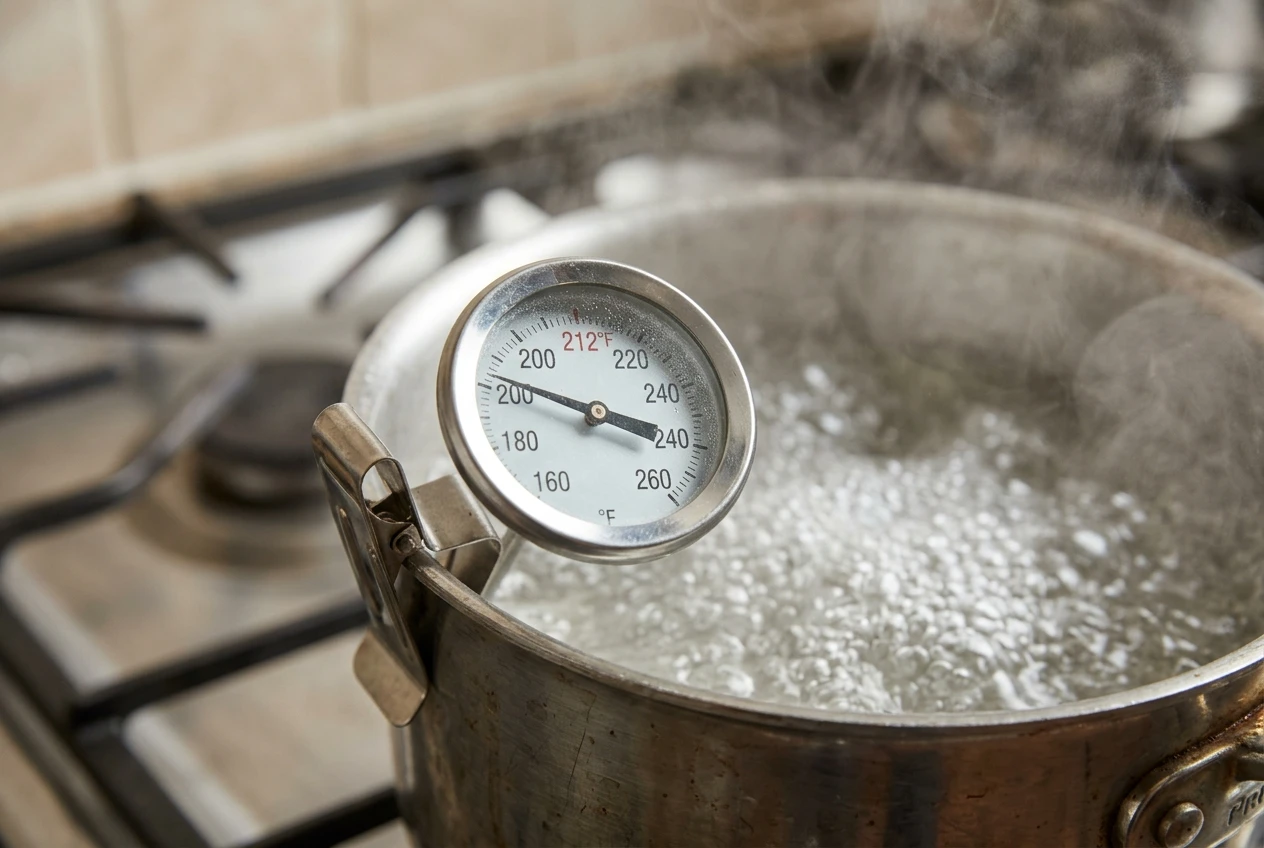
Here’s the test: bring a pot of water to a full rolling boil and clip your thermometer in, making sure the tip isn’t touching the bottom of the pot. At sea level, water boils at 212°F. Whatever your thermometer reads at a steady boil tells you its offset. If it reads 205°F, you know to add 7 degrees to every reading going forward. If it reads 222°F, subtract 10. If it’s off by more than 10 degrees, or if the reading jumps around and won’t settle, it’s time to replace it rather than try to do math in your head mid-batch.
This test takes less time than it takes to clean your candy pan, and it’s the single most useful thing you can do before your next attempt.
Humidity, altitude and other sneaky factors that shift your target temperature
Even a perfectly accurate thermometer can lead you astray if you don’t account for where you’re cooking. Altitude is the big one: water boils at a lower temperature as elevation increases, which means your hard crack target shifts down too. A rough rule of thumb is to subtract 1 degree Fahrenheit for every 500 feet above sea level. If you’re at 4,500 feet, that’s about 9 degrees lower than the standard 300°F target.
Humidity plays a smaller but real role. On a very humid day, sugar can pull moisture back in as it cools, which sometimes makes a batch that hit the right temperature on the stove still feel slightly softer than expected once it sets. This isn’t usually the main cause of chewy toffee, but it’s worth knowing about if you’ve calibrated your thermometer, nailed the cold water test, and the toffee is still a touch softer than you’d like.
The boiling water test handles altitude automatically, which is another reason it’s worth doing. If your water boils at 205°F instead of 212°F because of elevation, that same offset applies to your hard crack target, and you don’t need to look up a separate chart.
Can you save a chewy batch? What’s worth trying and what isn’t
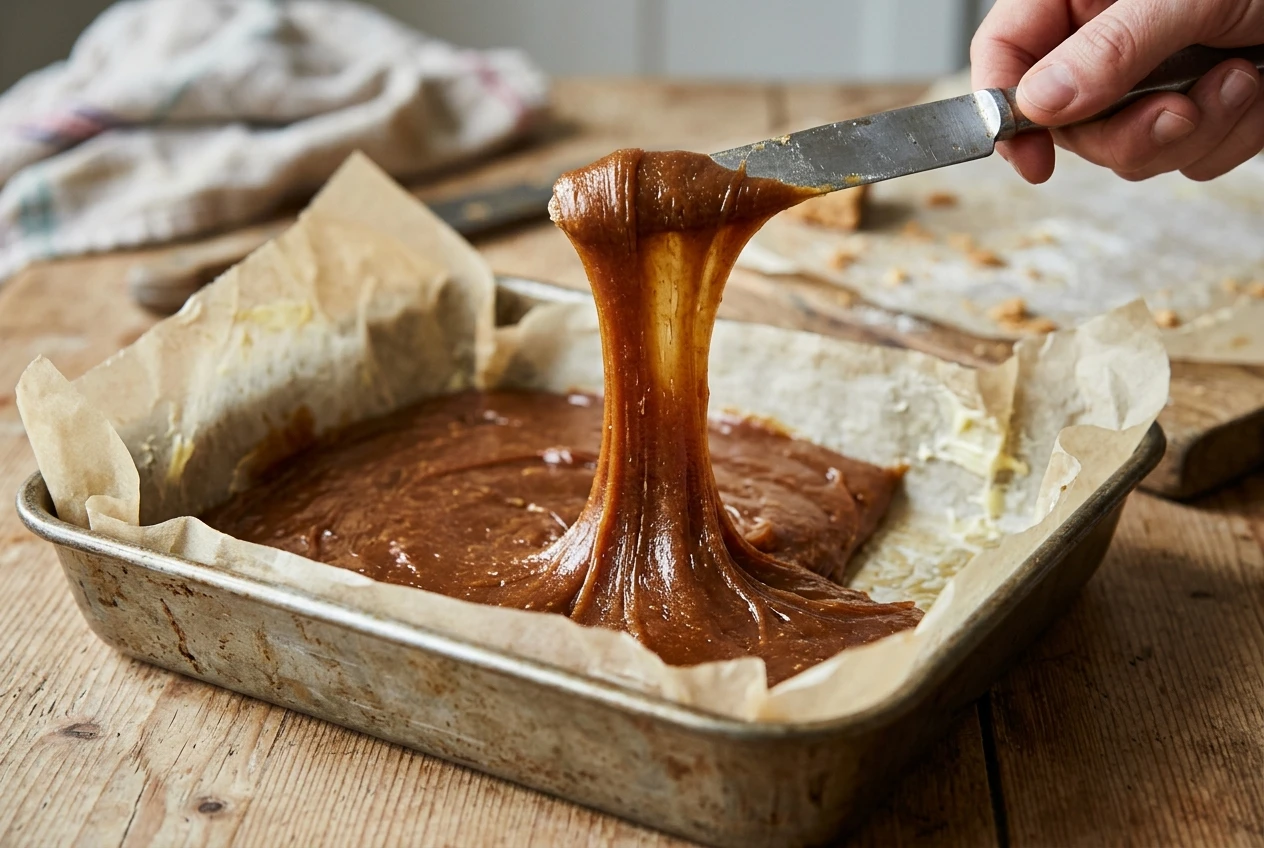
Once toffee has cooled and set chewy, you generally cannot fix it by reheating the finished slab. Breaking it up and putting it back in a pan tends to scorch the butter and sugar unevenly before it ever gets back to temperature, and the texture rarely recovers even if you get the number right the second time.
If you catch it while the sugar is still in the pan and hasn’t been poured out yet, there’s a better chance. If your cold water test or a freshly checked thermometer tells you it’s short of hard crack, you can put it back on the heat and keep cooking, stirring gently, until it actually reaches that stage. This only works if the butter hasn’t separated out and the mixture hasn’t started to burn.
If the batch has already been poured into the pan to cool, your best move is usually to accept it for what it is. Soft, chewy toffee is still delicious; it’s just closer to a soft caramel candy than a brittle toffee. Rather than fighting that, some people repurpose it as a filling or topping where chewy texture isn’t a flaw. That’s a reasonable outcome for tonight, and a good next batch is where you actually fix the problem.
Getting it right next time: pan, stirring and when to start checking temperature
A heavy-bottomed pan matters more than it seems like it should. Thin pans develop hot spots that scorch sugar in one area while the rest of the batch lags behind, which makes it hard to get an even, accurate temperature reading anywhere in the pot.
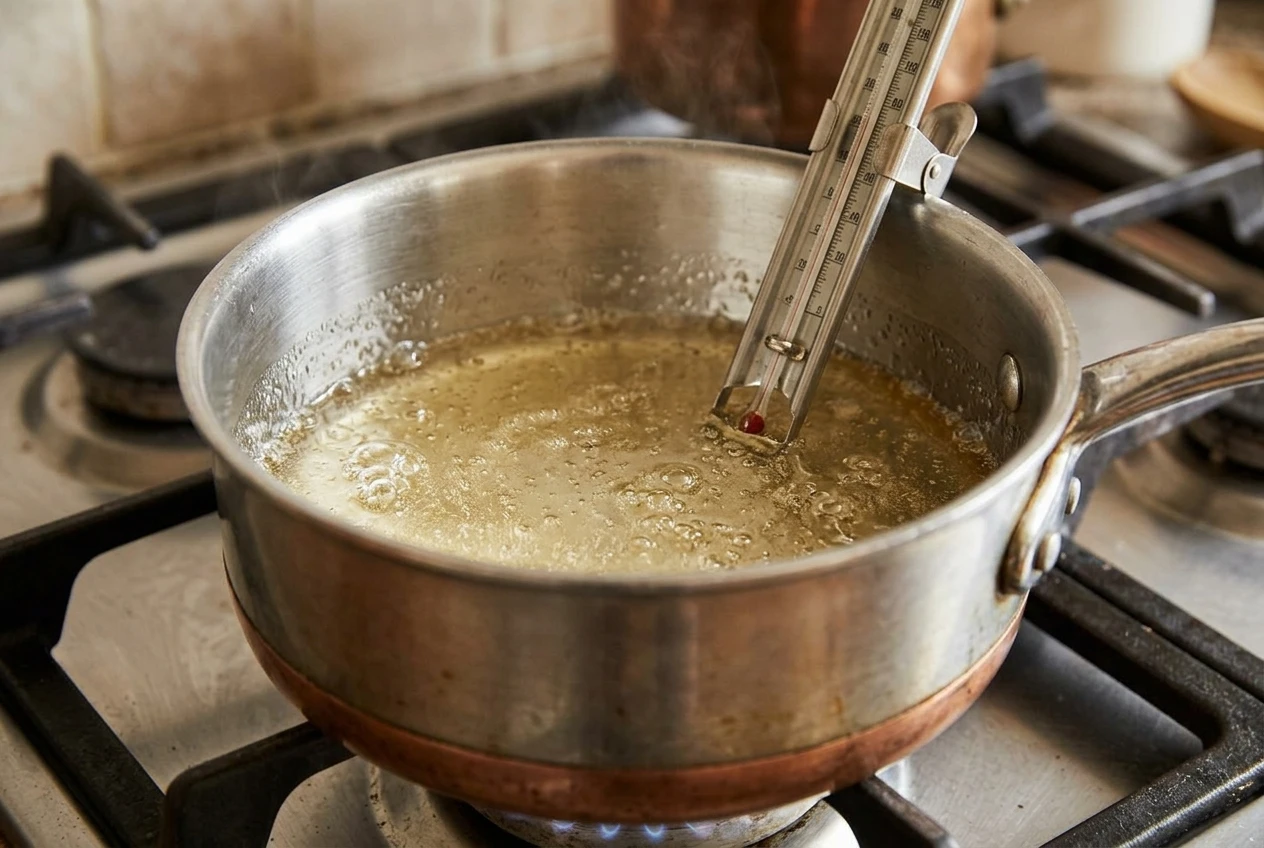
Start checking your thermometer once the mixture turns from pale yellow to light gold, rather than waiting until you think it’s close. Candy temperature climbs slowly at first and then rises fast in the final stretch, so checking early gives you a sense of the pace and keeps you from overshooting.
Stir only as much as your recipe calls for. Toffee usually wants occasional stirring to prevent scorching on the bottom, not constant stirring, which can introduce air or cause sugar crystals to form on the sides of the pan. If your recipe says to stir occasionally, trust that instruction even if it feels like you should be doing more.
Finally, make sure your thermometer’s bulb or sensor is fully submerged in the sugar, not resting against the side or bottom of the pan, which will give you a false high reading from direct metal contact rather than the actual temperature of the sugar.
A quick checklist before your next batch goes on the stove
- Run the boiling water test on your thermometer and note any offset
- Adjust your hard crack target if you’re above 500 feet in elevation
- Use a heavy-bottomed pan, not a thin or warped one
- Start checking temperature once the sugar turns light gold
- Confirm doneness with a cold water drop test, not just the thermometer
- Make sure the thermometer tip is submerged in sugar, not touching the pan
If your thermometer hasn’t passed the boiling water test, it’s worth replacing before your next batch. Check out the candy thermometers we trust and recommend most for consistent hard crack results.